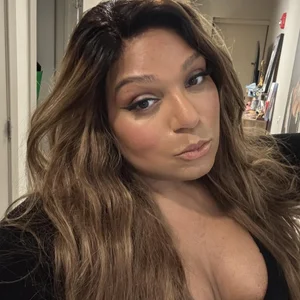
Jaelynn Scott is on track to become Washington's first openly trans legislator
An early Sunday brunch. A night out full of laughter and liquor. Catching up while running errands. We all have ways to reconnect and find balance when the world feels unfair.
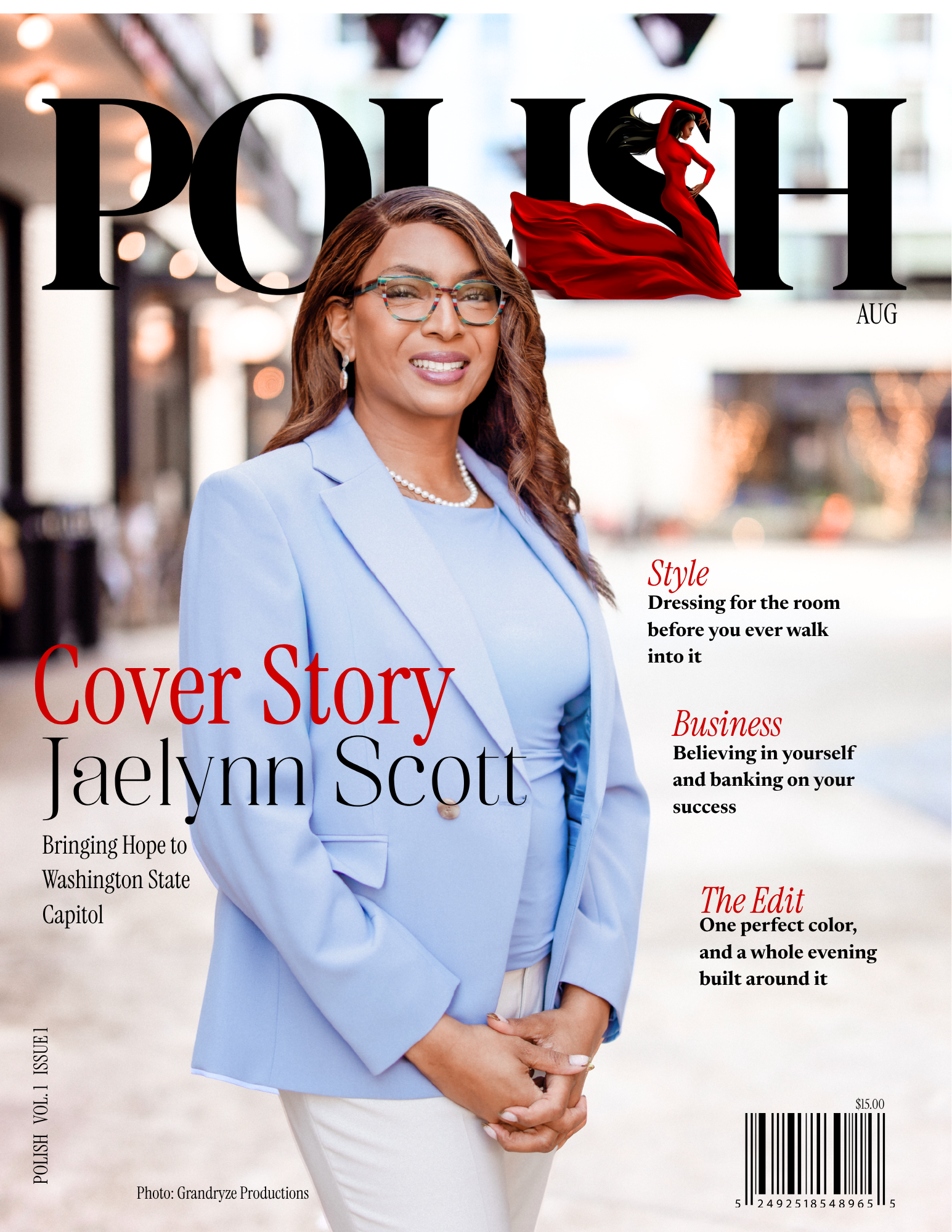
Community organizer and candidate for Seattle’s 37th District, Jaelynn Scott. (Photo: Grandryze Productions)
For Jaelynn Scott, it's a weekly FaceTime with her "sisters group." They come together at difficult moments in each of their lives and never let go. They call when there's a moment of crisis. They call when there's a moment of joy. They are, in her words, queer as hell and trans as hell and unapologetic about it. Yes, they can get catty, may even fight a little, but then they love each other like a close group of friends would.
When I asked her what recharges her off the clock, that's where she went. Not a hobby or a spa day, but a standing appointment with two people who know her.
Hold that in one hand. In the other hand, here's this: Jaelynn will be Washington's first openly transgender legislator. She took nearly 90% of the primary vote in Seattle's 37th. She is also the executive director of the Lavender Rights Project. In 2019, Jaelynn took over and grew the program into a powerful organization. In January, if the November general goes as expected, she will enter the legislative building. There, no one will look like her.
She felt nervous as she knocked on the doors of Baptist churches and machinists' halls. She said so plainly. She carried the anxiety that many trans and queer folks have about how we'll be received. And, yet, she went anyway. And what she found was people who had been waiting for somebody to ask. Scott stepped away from her ministry to run and spent months trying to find her footing again, only to realize she had never actually lost her step. Few told her that the seat fell open for her; she will tell you that five or six people wanted this race, and she built the coalition that cleared it.
Not a surprise. Strategy.
Black and brown trans and queer people do not survive institutions on grit. We survive them by relying on each other. Those who succeed usually have someone on the other end of the line. This person knew them before the titles and accolades. For Scott, she is going in with two sisters, a ministry she never left, and a coalition she assembled door by door.
Marie-Adélina de la Ferrière: For those who may not know you or follow you yet, tell our readers a little about yourself.
Jaelynn Scott: It’s so good to be with you today. I’m Jaelynn Scott. I’m running to be the next state representative in the 37th legislative district. That’s the Central District in Seattle, hooking Lake Washington, all the way down to an unincorporated area called Skyway. Beautiful district.
In my day job, I’m the executive director of Lavender Rights Project. I’m a community minister and a community organizer. I like to say a movement builder sometimes.
You took the Lavender Rights Project from a legal aid clinic to a full advocacy powerhouse. What did that transformation actually look like day to day, and what almost broke you in the process?
A lot of the work, and I’d even say this run, is a continuation of what I’ve been doing over the years. There’s a question that sits with me: how do we actually build unimpeachable political power for our community? Besides protesting, besides taking care of our direct services, how do we actually change systems?
There are many ways to do that. I don’t think the legislature and the political system are going to be our pathway to liberation, but it’s certainly one piece of that puzzle.
We were doing legal services for the LGBTQ community with the intention of serving the most impacted, but that often wasn’t happening. Because we were playing the survival game of how many numbers can we hit to make sure we’re meeting our grant agreements. I came on in 2019. We were on the precipice of the uprising in 2020. Change was in the air, and we were very clear we wanted to be at the forefront of that change in Washington State. So we looked at who the people are we wanted to serve, and how we actually give them power in the organization so they can build political power in the state.
That meant not only getting money for mutual aid and direct support, but moving ourselves toward a land stewardship model where we actually have ownership of the land we’re on and how we’re building community on it. Not just criminal justice, not just yelling on the city hall steps about our folks being killed in jail, but actually building out a different system that moves our people out of the criminal justice system and reduces mass incarceration.
The most rewarding piece is seeing what happens when you give an opportunity to people who have been pushed out and marginalized. People approach us with an assumption of ignorance. It’s because they’re so disconnected from the earth, so disconnected from community, that they don’t see the wisdom that folks of color, that women, that trans folk bring. Not just in lived experience, but in the brilliance of their minds. Watching leaders we’ve trained and lifted just shine when given a moment to advocate for themselves: that’s what gets me out of the bed in the morning. And that’s the hope in the legislature too: that we bring forward the people with the most wisdom about how to build a commonwealth in Washington State, and show that we can actually govern a lot better than these folks who went to law school and are in bed with lobbyists and large corporations.
What almost broke me is the system. And there’s a constant disappointment in some people in our movement...I’m speaking of some of our siblings in movement spaces, in Black movement spaces, Latina movement spaces, where it’s sometimes surprising how we will organize against our own interests. We’re watching Mamdani. We’re watching people across this country move forward on housing solutions, on socialist issues that we know will improve conditions for communities of color, for LGBTQ communities and, yet, we are willing to take on the narratives of the centrists and the right and take down our own people and organize against our own policies. For what?
That has been a deep disappointment. You constantly have to nurture yourself and remember that I’m here as a leader to continually bring us back to our moral center.
You’ve never held public office, and you’re on track to be Washington’s first openly trans state legislator. You’ve also said you don’t want to be the token trans candidate. What does substantive representation look like to you, practically, once you’re in that building?
I can tell you’ve been reading some of my stuff!
We have seen what happens when we put leaders in place who look like us but may or may not hold our values. It’s going to be a constant check with myself once I’m in the political system: am I negotiating on behalf of my own personal ego and career objectives, or am I actually negotiating on behalf of the community and being deeply in touch with their issues?
Substantive representation means the policy agenda I push forward, the votes I take, the negotiations I make are rooted in some history: leftist communities of color, and a strategy built by them, not necessarily by a political party or a consultant. It’s in full conversation with community, reflected back to community, and willing to receive respectful and loving feedback and make corrections when necessary. It also means, yes, I am going to be standing on business for trans communities and LGBTQ communities. But I also understand it’s not just about trans issues...Our communities are being pushed out of Seattle because of private equity ownership of housing, because we don’t have enough investment in publicly owned housing, because we don’t have enough trans competent, communities-of-color competent housing service providers.
We made promises about building a criminal justice system that has community caring for ourselves. We know we care for ourselves better than police do. Community protects us. We invested in community response models in the city of Seattle, and now we’re suddenly divesting from them, and they’re not functioning because we’re allowing them to be undermined. That is a trans issue, because we know incarceration for trans folks is often a death sentence, as it is with other communities of color.
To be tokenized is to be told that our plight is just one about identity. When I can tell you our plight is an economic issue, one that doesn’t just affect trans folks. It affects communities of color. It affects poor folks who are not communities of color across this country. We’re finally seeing a working class movement of people being loud and unapologetic about seeking representation that matters to them on the issues that matter to them.
In my district, 88%...they don’t care that there is a trans person showing up, no matter how they feel about us. And I know some of them don’t mess with our people. But they care that somebody is saying the thing that needs to be said about the economic conditions, that we are facing austerity budgets in this state and a refusal to invest in our communities. They need a fighter, and they don’t care about the identity. That is substantive representation.
Economic discrimination has shaped your platform. When you picture what safety actually looks like in your district and in your state — materially and legally — what does that look like?
The 37th is a historically Black district, mostly around the Central District but throughout Rainier Valley. It also has some of the most diverse communities in Seattle. There’s the Khmer community. We have the Chinatown International District, the Ethiopian Community Center, the Filipino community centers. All of that is in my district. It’s so beautiful, so amazing, and deeply complicated.
It also means most of those communities get the first and the worst of environmental racism. We are at the bottom in terms of median income, and we experience community violence because of a lack of investment in our social infrastructure.
I have been trained in my ministerial training, as a socialist, to understand that violence is a symptom. It is not the cause. Violence is a symptom of lack of investment in our society and in our community. When we don’t have access to housing. When childcare is almost equivalent per month to what we make...so parents can’t actually hold a sustainable job and take care of their families. When you have deep underinvestment in education and some of the schools in our district are the ones absorbing a $100+ million cut in education in our state. When that starts hitting from all those pockets, of course violence escalates. And with violence come harmful policing practices and more interaction with policing that is unnecessary.
So it’s got to be twofold. We have to fix the social conditions and invest in an often erased district, and we have to invest in community violence intervention programming that has been proven to work. Not deeper investments in policing.
A lot of us have moved away from language around defund and abolition. That’s a strategic choice, but we’re also being realistic about where we are in 2026 and what we need right now. My vision is a world where there’s no violent crime and no need for policing, and I think all of us share that vision, whatever name you put on it. But that requires deep investment in community responses to violence. And we can’t just do that. We’ve got to make sure the kids have a pathway to work, that they can get an education, that families can pay for childcare and afford groceries. And that the solution to violence in the 37th is not just pushing out Black folks and folks of color and changing the complete demographics of our district, which are radically changing.
It’s actually healing our communities.
In Olympia, Democrats hold a firm trifecta. But a majority isn’t the same as a shared agenda. How do you build solidarity inside the party to actually pass things, not just outnumber the opposition?
This is a challenge. We don’t have a supermajority, but we do have a trifecta. And with a trifecta, it would seem that so-called progressives — and I’m questioning that word lately. What does it even mean? Everyone has adopted it, and democratic centrist policies are suddenly what we’re calling progressive. The things we’re calling progressive now were just mainstream Democratic policies twenty years ago.
So we don’t have a shared agreement on what a progressive state with a trifecta should be doing. It should be no question that in a city with one in fourteen millionaires, that has some of the largest multinational corporations in the world...we should not be facing a $5 billion deficit and constant cuts year after year after year. People are not understanding that there is a sense of urgency, that we should have moved much quicker many years ago to fix our upside-down tax system and tax the rich.
And we are debating whether saying “tax the rich” hurts a few millionaires and billionaires versus saying these people have the privilege of operating in a state with one of the most amazing workforces out there. People who care for the communities, the gardens, the roads we drive on. All of your workers benefit from that as you build out your corporations and take in record profits year after year. And yet we don’t want to hold them accountable for taking care of our society. Those are people in the Democratic Party who are not quite willing to get there. So we moved a little and got a millionaire’s tax. We got a little. But then the new argument is: we need to protect it. Yes, we do. And yes, we need to figure out whether it will hold, play it out in court, and see what we can do next.
But because we’re so disconnected from the communities that elected us, we don’t understand that at this moment we are facing federal threats unlike we have ever faced before. We have our people being picked up off the street and locked away. We have a hunger strike in the Northwest Detention Center right now over conditions for our neighbors locked up in a for-profit prison. We have folks labeling trans people terrorists based on their identity and fighting their rights on those grounds. We have the federal government intentionally divesting from the state of Washington, pulling away funds and passing those costs down.
We are in a moment of urgency where our organizations are falling apart, where we can’t afford to live. And you’re telling us we have to be incremental and wait a few more years and maybe a solution will come? That is not okay. I don’t recognize a party that is okay with not at least trying to be very bold, and throwing everything we have at it. Because we know our people are the economic drivers of Washington State, the sanctuary we have here is special, and we have a duty to the rest of this country to live up to it, because we have that trifecta.
I am very willing to work with fellow legislators. But they’ve got to get to the place where they’re seeing the urgency our neighbors are seeing. I hope this political moment across the country is showing them that.
If you had a soundtrack for your first year in office, what’s on it?
Oh my goodness. I always get the song questions, and I get stumped.
We’ve been doing Sounds of Blackness as my walkout song — “Optimistic.” There’s something about that music. It was the era I was growing up in, that progressive hip-hop moment, with a little gospel brought in. There’s a spiritual base to it. That’s the theme song for me going forward, because it brings forward both the optimism of Black hip-hop culture during the '90s and our spiritual base, mixed together. And it says something about the coalition I bring together; this history of deep spiritual practice and ministerial training, as well as a long lineage of Black socialist and Black radical thinkers. And a community in the 37th with a long history of progressive activism that, for me, is always deeply rooted in the earth and in spirituality. Always looking toward a beloved community and building one.
In this moment, I have finally found some hope after these many years under the thumb of this administration. This is the moment where I’m willing to be optimistic about where we’re going as a country and as a state.
How does faith and spirituality anchor you in the work you do?
I’ve been thinking about this a lot, mostly because running is hard.
Most of our media is coming from outside the state...There’s a thing about erasing Black folks, Black trans women, Black women. And a lot of what’s coming in now that we’re getting attention is some of the nastiness we were expecting. I imagine it will continue to get worse, and in the legislature, who knows how it will play out. I don’t imagine it will be easy. The other thing is people saying, well, you didn’t really have a strong competitor. My competitor is a brilliant young man, and I’m so appreciative that Black men are running for office. I deeply appreciate him. But the argument is that I’m just kind of sliding in.
I have to say this has been hard. It’s challenging to be the first. Personally, emotionally challenging to put yourself in a position where you will be the first. It’s challenging culturally to move into a space where there’s no one who looks like you, or even shares your Weltanschauung — your worldview.
And a lot of work went into a strategy no one will acknowledge. There were five or six people who wanted to run for this office, but we did the work of looking really strong and talking with people about how to bring them into our coalition. People are deeply surprised this seat turned out the way it has. It’s not a surprise. It’s strategy. All of this has been difficult. We built a campaign that knocked on 4,000 doors, that brought in labor, that has been multiracial, that has been democratic socialist, with 88% of the vote. This has not been easy.
And it required me, having stepped away from my ministry and a little bit from my spirituality, to rediscover who I am and what my orientation is to the spirit. It required me to go back and find that grounding real quick. What I learned is that I don’t need to step away from the work I’m doing now as a candidate, as a movement builder, as an organizer — that my spirituality has been with me the entire time. That my ministry has been with me the entire time. I didn’t need to label it ministry. It didn’t have to be Reverend Jaelynn Scott.
I’ve always tried to operate from a place of grace. Giving others grace; being graceful in how I relate to people. I’ve always tried to see the basic goodness in other people, even when they act horrid. To see that there is goodness in them and hope in them, changing and shifting and moving.
My spirituality is the only thing that has kept me going and believing that a multiracial, gender-diverse, beloved community is actually possible. I don’t think I would be able to wake up every day if I didn’t have that as a core belief.
So I thought I had stepped away from ministry. But everything I’ve been doing has been my ministry.
Faith, activism, politics — you wear a lot of hats. Off the clock, what is actually recharging you?
I have a sisters group. Two women who have been in my life. We came together at difficult moments in each of our lives. They have been my rock. We FaceTime nearly every day during the weekday. We FaceTime when there’s a crisis. We FaceTime when there’s joy.
It’s tapping into those girls, those women who keep me grounded. We’re very queer as hell, we’re trans as hell, unapologetically. So we see each other in our full womanhood. We understand all of our cultural references together. We are just ourselves with each other. That call every day has been a lifesaver.
I do some national work in the LGBTQ space, too. But when I’m with folks like you, when I’m with my sisters. When they hold me and they see me, in spite of when I mess up, and I do mess up sometimes. Sometimes we’ll have disagreements and get a little catty with each other. But when we see each other, we’re like, baby, we’re going to hold each other, love on each other. We may fight a little bit later, but we care for each other as trans women and femmes.
That has been my rock and my lifesaver. And I think it’s what will get me through.
Nationwide, this is a hard moment for a lot of trans people. What do you know now, from the ground, that gives you real hope for where we’re headed?
I was very nervous about running this campaign and knocking on doors in traditional Ethiopian neighborhoods and Filipino neighborhoods; in historical Black neighborhoods with Black church folk. Going to missionary Baptist churches to speak. Part of me was very nervous about being rejected. With labor — machinists, carpenters — and what we say these people feel about trans folk.
Because the narrative being pushed out there nationally is something different than what I have experienced in the course of this campaign. When I knock on doors, people are like, let me just tell you what’s going on. They’ve been waiting on somebody to talk to. When I go to labor, they say, I’m glad someone from your community has finally come to us, because we’re concerned about our siblings, our labor siblings, who are experiencing this too. I think we have put ourselves in a bubble because of our anxiety about how we will be received as trans folk. What I have learned in this campaign is that we have a lot of allies: people who are just waiting to be asked to step up and be in relationship with us. This may not be universally so across the country. But it is, at least, with 88% of my district. And there are more districts like mine in California, Massachusetts, and Maine. We are leaving a lot of power on the table. We’re leaving money on the table. We’re leaving allies at the table.
The hope I have in this moment is that those people are out there, and now we know we can tap into them and change the direction of this country.