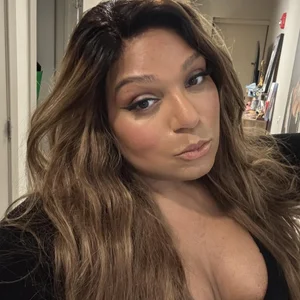
“You can't hate yourself into loving yourself”: Dr. JonPaul on the cost of not conforming
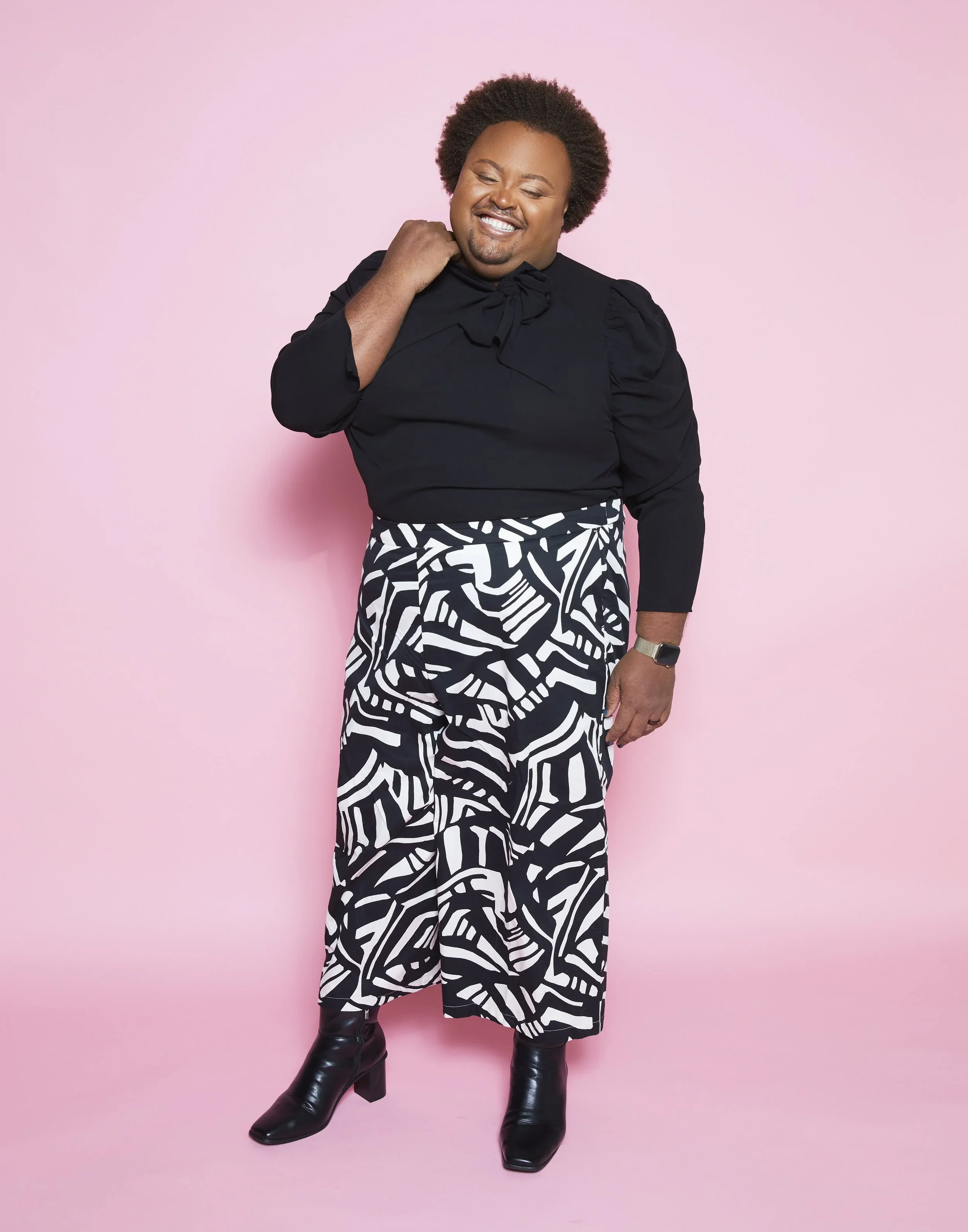
Dr. Jonathan P. Higgins (Sequoia Emmanuelle Photography)
Dr. Jonathan P. Higgins is a force to be reckoned with.
Better known as Dr. JonPaul, they're an educator by training who thought they were headed for a tenure track and ended up somewhere far more useful. Author of Black. Fat. Femme: Revealing the Power of Visibly Queer Voices in Media and Learning to Love Yourself, later adapted into an award-winning podcast, Higgins also serves on the Rainbow Pride Youth Alliance in the Inland Empire, working with queer youth. In June, the California State Senate named Dr. Jonathan P. Higgins the LGBTQ+ Pride honoree for the 31st Senate District: one of nine honorees recognized at the State Capitol alongside Senate Resolution 116, which named June 2026 as LGBTQ+ Pride Month.
And in the same season, Higgins has been on LinkedIn telling the truth about rejection. About rooms that stay closed. About the specific arithmetic of being visible enough to be honored and unmarketable enough to be passed over.
Both things are true at once. That's the whole conversation.
Marie-Adélina de la Ferrière: For the people who don't know you yet — and shame on them — tell our readers a little about yourself.
Dr. Jonathan P. Higgins: I always like to say I'm an educator by trade. I genuinely thought I was going to be a professor. I really thought I was going the traditional tenure track. I wanted to teach, and I was very passionate about that.
As I was making my way through my doctoral program studying the experiences of queer men of color in higher ed, my passion kicked back up for wanting to make notes and comments about media spaces, about entertainment. I was trying to zone in on this idea of, why is media not as representative of us as I wanted it to be, considering all the moves we had made? This is 2013, 2014 — this is when we had Laverne Cox, when we had all these Black trans and queer individuals starting to be at the forefront of media. And I was asking, why are our stories not being shown the way I personally felt they should be shown? I was teaching comms classes, I was teaching women's studies courses, I was using media as a module.
Long story short, I started writing. Started pitching. That took off, and I started being known as a person who had a voice in the sphere of media. Fast forward 10 years later: I have a book out, I have a podcast, I've been on more than 200 stages, I've worked with major brands, consulted, done all of the things. A big part of that is because I've stayed true to — what the girls say — clocking the T. I'm constantly naming the systems that are happening, not only in education but in the world and in media. So it's been a big push of me using the platform I have on Threads, on LinkedIn, on TikTok, at iHeart — using all of that to tell our stories the way I feel they should be told, with authenticity.
You've been recognized in so many ways, including being named an LGBTQ+ honoree for the 31st Senate District in California. How does it feel?
I keep going back to the word honored, and I think honored is such a great word, because for years I didn't feel seen. I wouldn't say I didn't feel valued, but it felt like a slow build. This constant slow build of trying to get folks to pay attention, to acknowledge that what I was doing wasn't just for me — it was for the greater good of everyone in our community, specifically the Black and brown queer, trans, and non-binary folks in our community.
And this is something I want to make known: I'm not just a voice online. I'm actually in the community. I work with trans kids. I work with a queer organization locally here in the Inland Empire. So doing that work, and then also doing what I like to say I moonlight as — a quote-unquote content creator, but also a thought leader in edutainment — using both of those platforms, and then to have the Senate say we see both of those things and we want to honor you for that? It's like, wow. It's actually making the impact I dreamed of when I started this in 2014, 2015.
I wouldn't say finally people are paying attention. But I definitely feel like the dream I set out to do is starting to impact the people and the community the way I wanted it to impact them. And it feels really good.
This honor comes at a point where government power is being aimed at marginalized communities — the ICE raids, trans bans, the overall erasure of diversity, equity, and inclusion. How do you hold that Senate resolution in one hand and the reality in the other?
This is a very good question, because it would be easy for anyone to say, well, why are you celebrating with the folks who want to harm us?
What I want folks to take into consideration is that when the Senate gave me this honor, it wasn't just saying, hey, you're an LGBTQ individual and we want to celebrate you. It was more than that. It was a day used as a proclamation to say we want to keep Pride alive here in the state of California. We want all of our states to know that on this day, we are acknowledging that Pride lives in California. A lot of folks came together — not just the caucus, but other Democratic individuals who work at the Senate — saying they want to support LGBTQ people in the month of June, to make sure they know that Pride will always live in California.
So there's a part of me that says, yes, I can acknowledge that a lot of the systems at the federal level are harming us and doing everything they can to take our rights away. But there's also a piece of me that recognizes that at least here in California, the right folks are recognizing not only the struggle queer people are going through, but also the people doing the work to make sure folks locally — and I'd even say nationally — feel safe.
I think about James Baldwin and this notion of duality. Two things can exist at the same time. Every day I wake up, there's a new story that's going to impact me and make me feel a certain type of way. But part of my work is going back and forth to Sacramento, talking with folks at the Senate and Assembly level about what's actually happening on the ground here in the Inland Empire with the LGBTQ kids I work with. So part of it is me recognizing that while I'm on their necks about things, I also appreciate that they see the hustle of literally existing in two different worlds. I have to exist in the world of the org I work for, and I have to exist in the world of media that I've created.
It is hard for everyone right now. But it's nice to know that at least the folks who have some ounce of power are saying, we're on your side, we've got you in the work you're doing.
I want to jump back to your early years. You've said you didn't really see yourself reflected anywhere. What was the image you needed and didn't get, and where did you go looking when the mirror came up empty?
I talk a lot about this in my book. I talk very openly about being a latchkey kid, having a mother who was a single parent, and living in a world where I was in a lot of ways alone. And I don't want to shame my mom — my mom was doing the best she could to support me and my brother. Growing up in a world where you come home from school and the only thing you really have to do after homework is watch TV or go outside — I was the kid who didn't like going outside, because I was bullied and teased a lot. So I stayed inside. It was either music videos or television.
A lot of what I was watching was Jenny Jones and Ricki Lake and Maury, all the '90s shows. And I noticed there was a theme happening — specifically when trans people would come out, or when queer people would come out, and the ways the world would respond to them. It was telling me something. It was telling me who I should show up as and who I shouldn't show up as.
But when I did find folks — and I don't know them personally, I just saw them on TV — how many of them were giving me some element of possibility? This is what you could be. This is who you can exist as in this world. I think that's the reason I wrote the book. TV, especially media, is way more powerful than we give it credit for. It can really help kids like me. People think, well, you lived in California, you should have had all these queer people around. Yeah — I also grew up in a very religious household, and a lot of the stuff I was watching, I was sneak-watching. You can live in a place where it's accessible and it's not accessible. And for a lot of folks, it's not accessible at all. TV is the only way they can find folks.
I'm thinking of Luther Vandross. I'm thinking of Miss J from America's Next Top Model. All of these individuals showing up in their full authenticity and telling me, even if it wasn't a direct Jonathan, you can be yourself — it was very much saying, these people are effeminate, they like to sing, they like to dance, they like to model, they like to walk, whatever. You can be you and it's going to be okay. That's why I'm so big on the work I do now. I want folks to grab onto not only me, but the stories I include in my work, and be able to see themselves.
Your work lives at the intersection of race, gender, and identity in education and entertainment. Edutainment, as you say. When did you realize those weren't separate lanes but one road?
I think I've always known that. It's one of the reasons I struggle with the term influencer so much, because influencer waters down the craft of so many people — especially since a lot of influencers like me have degrees. They've gone to school, and it just so happened they got online and started talking about something they were passionate about and are now using it to educate the world. I still struggle with content creator for the same reason.
A big part of why I love the term edutainer is that I like to talk about entertainment, but I love to talk about it from an educated lens. I love to talk about theory, concepts, ideologies, things happening in media. For instance — the ways media is intentionally ignoring the deaths of Black people. There's a trend happening here. What does erasure mean in media right now for Black and queer people? We're seeing the deaths of Black trans people not reported on. We're seeing the ways television and film are or aren't including Black and brown voices and storylines.
It's not just me saying this thing is wrong and this is a problem. There needs to be a concept or a theory or an ideology we can adhere to in order to have the conversation. So: what does erasure look like? What does misogynoir look like? What does femmephobia look like? What does transphobia look like? What does anti-Blackness look like? For many people, they'll see it and go, that's homophobia. And I'm like, no, babe. It's more layered than that. What are the intersectional oppression pieces that Kimberlé Crenshaw talks about in everything we take in?
So when people say John's an edutainer — exactly. That's exactly who I am. One, I'm still paying off these loans on this doctorate. But also, I really want folks walking away from my content — the podcast, the book, this interview — more enlightened and more educated than when they came in. I don't purport to be the smartest person in the world. There are way more educated individuals than me who are more nuanced in their terminology about what's happening now. But I want folks to be able to say, Dr. Higgins has a point, and Dr. Higgins actually studied that point, and these are the things we need to be paying attention to.
What's a conversation the community keeps avoiding?
I think a lot of it is desirability politics. We see it now with the whole GLP-1 conversation. We see so many of our celebrities who we once thought were fat liberation leaders now shrinking themselves.
It's not my job to say anything about people's bodies or the decisions they make about the size of their bodies. But there's something to be said — and it's interesting, because I'm currently writing a proposal about this very thing — about the intersections of femmephobia and fatphobia and where they live.
A lot of what our community struggles with is the ways we have platformed patriarchy and put masculinity on a pedestal. When you start thinking about how media has traditionally talked about masculinity, there's a specific look. And when you don't feed into that, when you don't adhere to that, it becomes a problem.
A lot of folks want to say, it's a preference. And it's like, no, it's not a preference. You have bought into the system. You have in a lot of ways been brainwashed — and we all have. White supremacy as a whole is a brainwashing mechanism, to believe you have to adhere to this white cis male standard in order to be respected. So we buy into that and think that's the only way to feel loved or seen or valued.
And then when someone like me comes along and says I don't want anything to do with any of that, or a Black trans person comes along and says, actually, this thing you told me I needed to be — that's not who I am, I want my own autonomy and to live life the way I want to live it, people have a very hard time with that.
Here's the part folks are not talking about. There's a certain freedom that Black non-binary people have, that Black trans people have, that the world is not okay with — because they're so used to putting us in a box and telling us how we should act and how we should show up. And when you say nah, screw that, people struggle with it. It's the element of freedom that many people are fearful of. Once a Black, fat, queer person can say, this is how you need to treat me and I'm going to hold you accountable to that — it's scary. It can be quite scary.
You've said the podcast is about calling people in to understand self-love. How is building a table different from chasing an audience?
Whew, I always forget you're a journalist by trade. That is a great question.
I know we had this conversation yesterday, and my thought has changed a little since yesterday. One of the things I've been having to sit with these last couple of weeks is this: there are a lot of things I want to do, or believe I should be doing, or even things I go out for — and then the universe grabs me and says, actually, that's not what you're doing. You're going to be doing this over here.
I'm really getting away from chasing the traditional table. I don't feel like that's in the cards for me anymore. And when people look at DoctorJonPaul as a brand and say, well, you've built your own table, I'll say I don't think I've built the table yet. I think I've got some of the tools. From having a book, to having an award-winning podcast, to winning an award from the state of California, all of those things are setting the stage for something bigger.
I don't know what that bigger thing is. I don't know what the universe is trying to lead me toward. But everything I've tried to do has not fared the way I wanted it to, and everything where I've said I'm just going to let the universe take care of it — the universe always makes sure I'm taken care of and puts me in places and situations to further move the needle on the work. And I say the work meaning liberation work. Helping Black, brown, trans, fat, queer, non-binary people find their voice.
Did I set out to do any of this? No. I didn't wake up one day and say I want to start a brand. I was pushed out of education. I'm glad that's not my story now, but that was part of my story. Being pushed out of education, I had to do what most Black trans people do. I had to learn how to pivot. I had to figure out how I was going to make a living, and a big part of that living was speaking, writing, being on panels, consulting.
Now all of that is helping me as I build the table. If my show ever ends and someone says, do you want to be the executive producer of my podcast — I know how to do that. Right now, I'm working on a project where they reached out and said, we want you to help us do this thing coming out later next year. I know how, because I've done it before. I did it for Amazon. So when I look around and ask, is the traditional table somewhere I want to be? No. I don't think it's going to benefit me, because I think the universe put me here for something way bigger. I don't fully know what that is yet, but I feel like I'm building it, and I'm right where I need to be for the momentum to keep going.
We shrink ourselves when we start chasing after the things the world tells us we should be chasing after. Whether it's a Fortune 500 job, or a journalist job behind a desk where you're only reporting on certain stories. I think about you, POLISH — you're now able to tell your stories the way you want to tell them without anyone saying, no, that's not a story you need to report on. You get the freedom to write and navigate things the way you want. That's what I love.
Even though I have big names like iHeart behind me, or Wiley behind me, they know who I am and what I do, and they allow me to do things the way I want to do them. That's the dream. The dream is to be able to say my work has no restrictions. I don't think I'm fully there yet, but I'm getting to a point where I can call the shots and people see them and respect them, because they know I've done the work to get there.
You've been very honest on LinkedIn recently about the job market, the rejections stacking up, the weeks where the disappointment is the whole post. What does that gap between how visible you are and how hard the doors are to open teach you about who this industry was actually built to reward?
Frankly, it tells me it wasn't built for me. It tells me that in a lot of ways I'm the problem. I'm the reason my success doesn't look the way I dreamed it would. And there's something to be said about what happens when you don't conform.
Conformity is a big piece of what's happening right now. We're watching it with the bigger networks. We're watching Paramount. When you see CBS fall in line and do what Trump wants them to do, when you have these big organizations say I'm going to conform and do what this administration is asking me to do, it says a lot about the industry. And it says a lot when we see organizations that claim to rep and move for Black and trans people and then let all their Black and trans people go. There's a lot happening right now that shows me the reason why.
That's what I've had to sit with each day. I've had to say: it's not that your scripts are bad, girl. It's not that you're a bad writer. It's not that you don't have the chops to be in a writers' room. It's the fact that you won't conform.
And it's about accountability. Me being a very staunch person who speaks up about injustice — I get in a room with a white person and they say or do something racist, they know I'm going to call it out. They don't want to have to deal with that. So what's the easiest thing to do? Let's not hire Dr. Jon Paul. Let's not hire Marie, because we know Marie is going to say, I have a problem with this, this, and the other.
That's what I've had to accept. Part of my success is about finding the people who are okay with me holding them accountable, who say, I actually do want to do the work. I actually do want to be a good person. When I talk about what I see as failure — the rejections, the opportunities that don't come, the drying up of opportunities, because that's happened too — I want folks to understand that a lot of it has to do with me not conforming to the system that wants to oppress me. And what that's going to look like in five to 10 years, when all of this is said and done, is I want to be the person they said, John never changed. John was the person they were when it all began and John was the person they were when it all ended. And we need to be more like John.
Am I sure my name has come up in meetings and people have said, no, we can't work with them, they're not good for our brand, they're not good for our look? I'm sure. And that's okay, because I don't need to be in a place where I have to conform. It's more than just me not getting opportunity. It's a bigger conversation about what this industry — and I mean industry as the full piece of media — is saying to Black, queer, non-binary, Latinx folks who refuse to bend.
The outlook right now for us is bleak, and we can't really pretend otherwise. There aren't enough memes in the world. So how are you making room for joy, and reminding queer youth why joy matters when they feel scared or hopeless?
I love this question so much. It's very easy to get on a mic and just go off about how terrible the world is, because we're all feeling it. There's something to be said about bonding in misery. But a couple of things have been helping me.
One, therapy. I have a therapy appointment right after this interview. That's been a big thing; trying to work through things I even thought I'd healed from that I know I haven't, so that my pain and my issues don't rub off on other people. So I don't make myself other people's problem. The other thing is finding folks who make me feel safe. I've shared this online, and I'll share it here: I'm becoming more and more aware of the energy people have and how it impacts me when I'm in spaces with them. Sometimes you have to acknowledge that even though you may think they're your friend, they still don't make you feel safe. Something is telling you in that moment, yo, this is not a place you need to be. So I think about that a lot. What does safety look like for me when I'm in a space with people? Are they looking out for me? Are old feelings coming up, things from the past?
And the last thing has been finding funny wherever I can find it. People ask me, John, you're always laughing. Yes, something is always funny to me, and I'm going to find that funny, whether it's a Reel, a TikTok, a text from a friend, or me going back and forth with people online about something silly. A lot of it is the community I've built on Threads, on Instagram, the community I have in my phone, the chats, people like yourself who we bring on the podcast and will be bringing on again — wink wink — in the next couple of weeks. It's really about finding your people and finding your space and your place in this world. And taking up the space. A lot of folks want us to shrink right now. And when you say, nah, I'm going to go ahead and be who I am and you'll just have to deal with it — I think that's a big part of what brings me joy.
It sounds like another space for joy is your upcoming second book. Can you talk about it?
I can. Right now I'm in the proposal phase. If there's a big five publisher that's interested, or if anybody watching this has links to a publisher — girl, tap me on the shoulder. I want to put you in touch with my literary agent. The tentative title, and as folks may know with books, titles change, especially once they're purchased, is You Were Meant to Disappear.
It's sort of a memoir. I'm walking folks through the ways media, specifically television and film, told me as a fat person that I didn't deserve to exist throughout my life. I start very young. I talk about a very funny interaction I had with someone at a store. The first chapter is tentatively called "SnackWell's Chronicles," and I talk about all the ways my family engaged in the reduced-fat of it all — eating less, don't eat that, you shouldn't have that, what's a bad food versus a good food. All of that conversation started for me in the early '90s, and I trace how it leads to where we are today with the GLP-1s of it all, and looksmaxxing, and everything else.
By the end of the book, I'm going to walk you through this history and this retelling of none of what we're going through right now is new. It's just been rebranded. Really getting folks to understand that when you ask the question, well, why are so many fat liberation leaders shrinking themselves — it's because throughout their whole lives they've been told they need to disappear in order to be valued, in order to be seen.
I'm using my own personal story to make it more fun, more funny, because I have a lot of funny stories about my body and how I've made peace with the body I'm in now. But the book isn't me telling people how to make peace with their body. It's asking, throughout: what does it look like for you to not see yourself as a problem, but to see yourself as already the solution? What if you just said, I am the solution, and that's okay? What if I just liked me? What if I just loved me
Because the two things I say quite often are: you can't hate yourself into loving yourself. And there's a lot of money in you not loving yourself. That's what I want people to see throughout the book: capitalism is a big part of the reason why we hate who we are.
When some future Black fat femme is celebrating their ancestors, what do you hope they say about DoctorJonPaul?
I hope people see me as the solution and not the problem.
I recognize that education is elitist in a lot of ways. Even within education, people gatekeep terminology, they gatekeep theory, they gatekeep conversations that need to be had around people's work. It's a choice for a teacher not to include bell hooks in their readings. It's a choice for a teacher not to include Black authors or Black thought leaders in their readings. And that still happens a lot. So what I really want folks to say is: John was accessible online. John left a trail of breadcrumbs around all of the things that happened to me, all of the things happening to me, how I experienced them, how I made sense of them.
I don't wake up every day thinking I'm going to be the next MLK or the next Marsha P. But when people see James Baldwin, when people see Audre Lorde, when people see W.E.B. Du Bois — I want folks to see me in that same vein of these people used their talents to help other people get free.
Lord willing, the Black Fat Femme podcast keeps going another 10, 15 years. It'd be cool to say my show's been on that long. But even if the show comes to a halt one day, I want folks to be able to go back into the canon of that show, listen to all the interviews, and say, wow, this is a mass of Black queer stories. These are things that will forever live online that people can access and learn from. So I want folks to see me as a digital freedom fighter. Or a digital freedom archivist, if that's the right word. I want folks to be able to look at my work and be able to say, I found myself through Dr. Jon Paul.
Dr. Jonathan P. Higgins is the author of Black. Fat. Femme. and the creator and executive producer of the podcast BFF: Black, Fat, Femme. Find more of their work at doctorjonpaul.com.